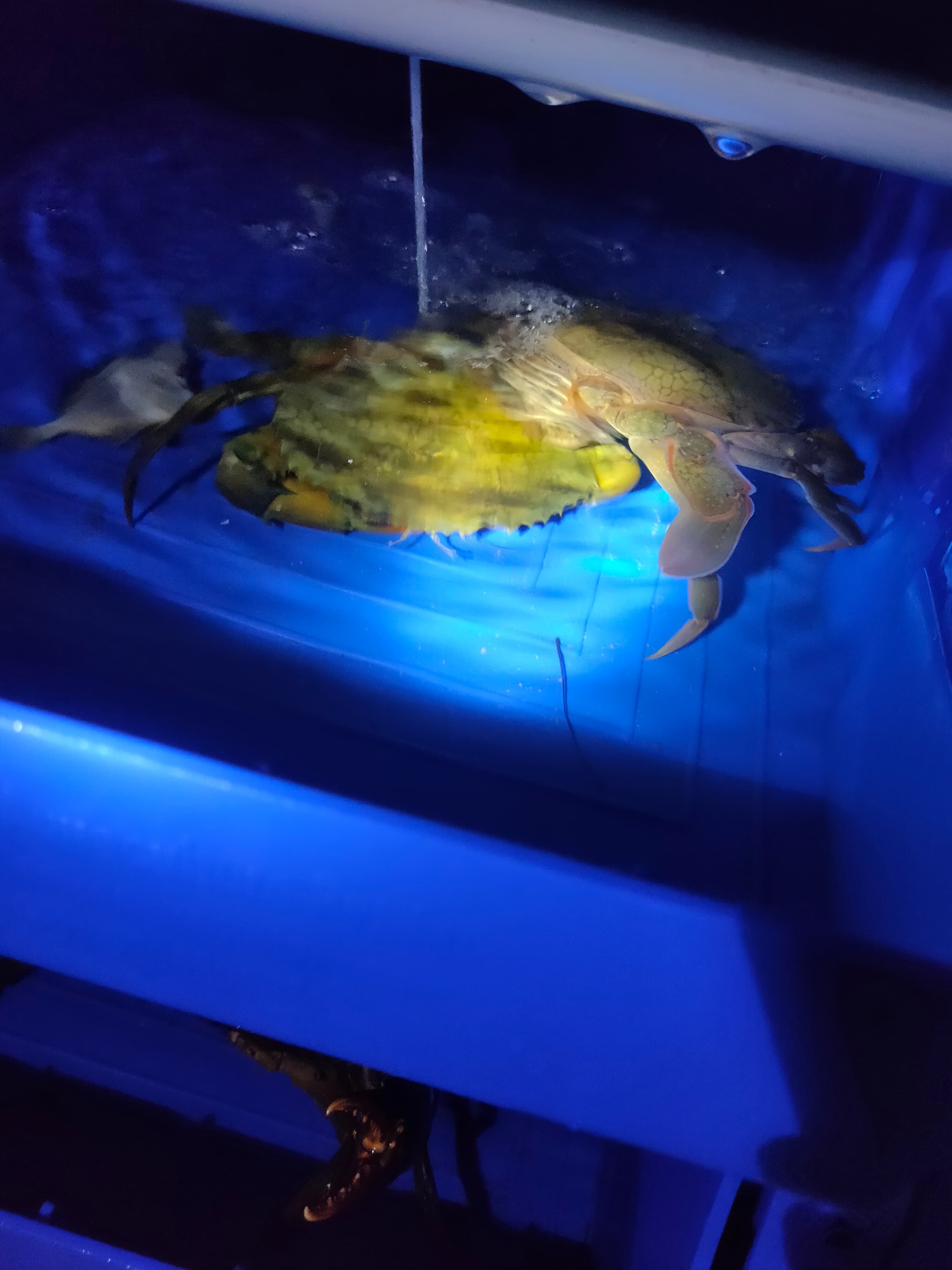
 Production photograph
Connected aquaculture solutions
Built around the production work.
Physical infrastructure, sensing and operating software being developed together for mud-crab aquaculture.
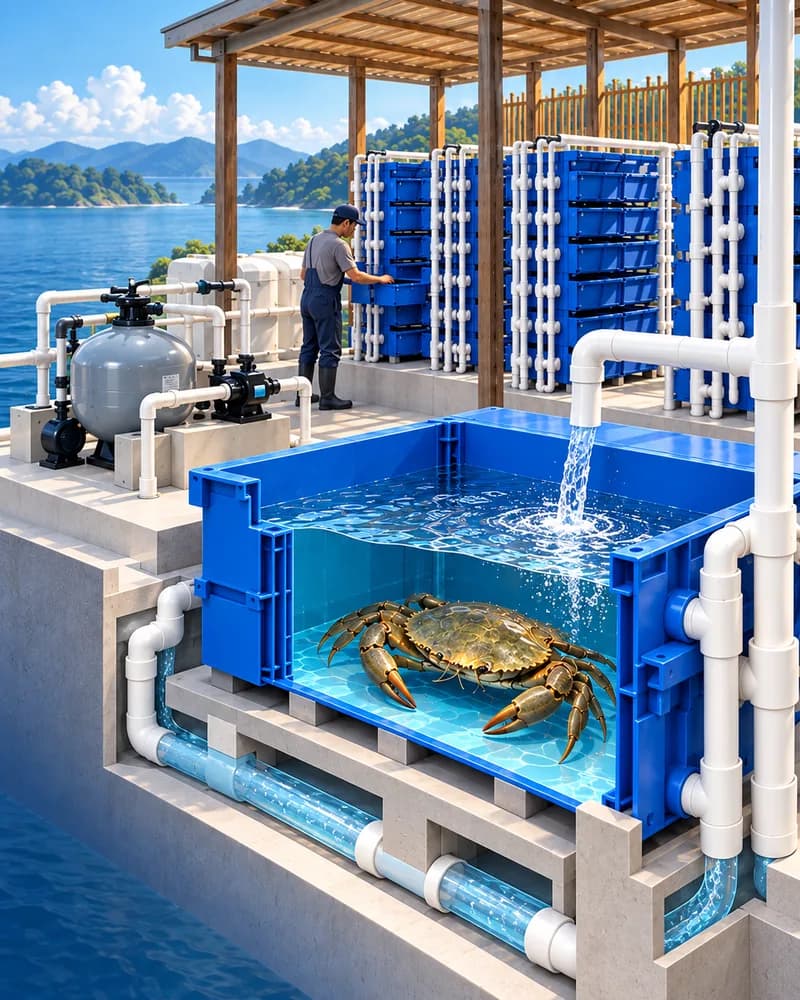
Four connected components
Understand each part. See the whole.
Explore the role, development scope and production questions for each component.
Production photograph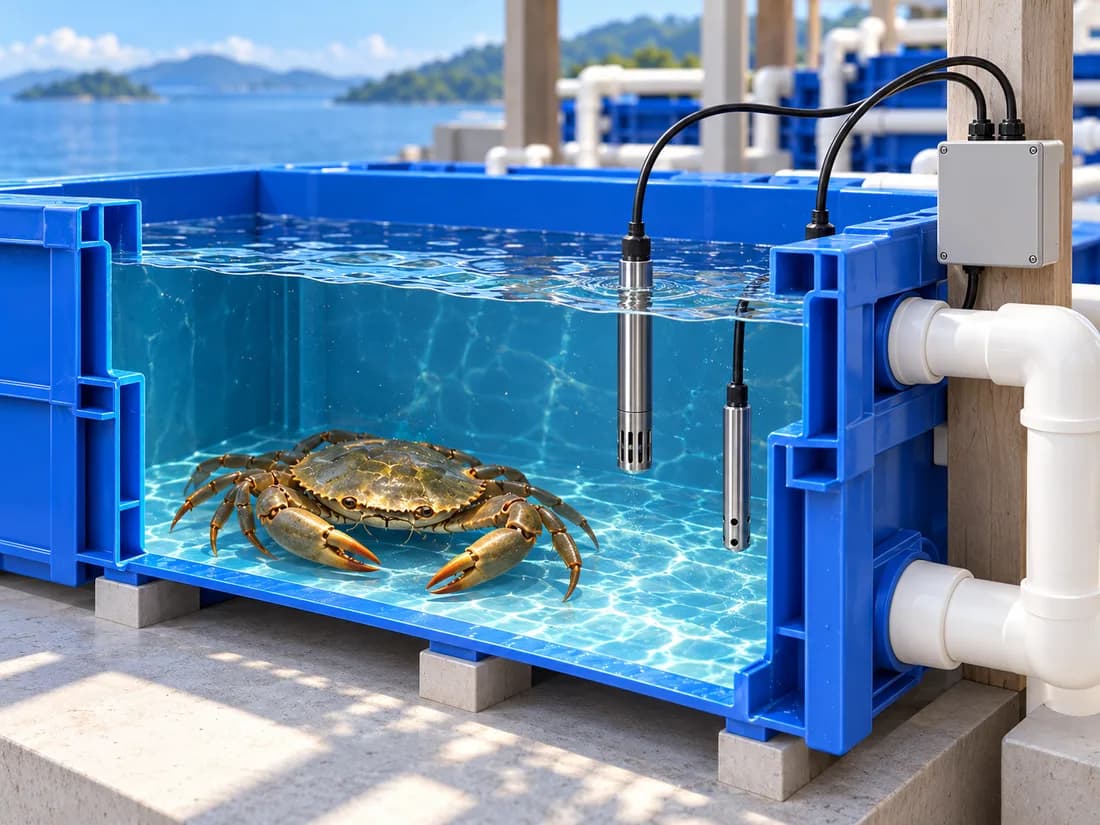 Concept illustration
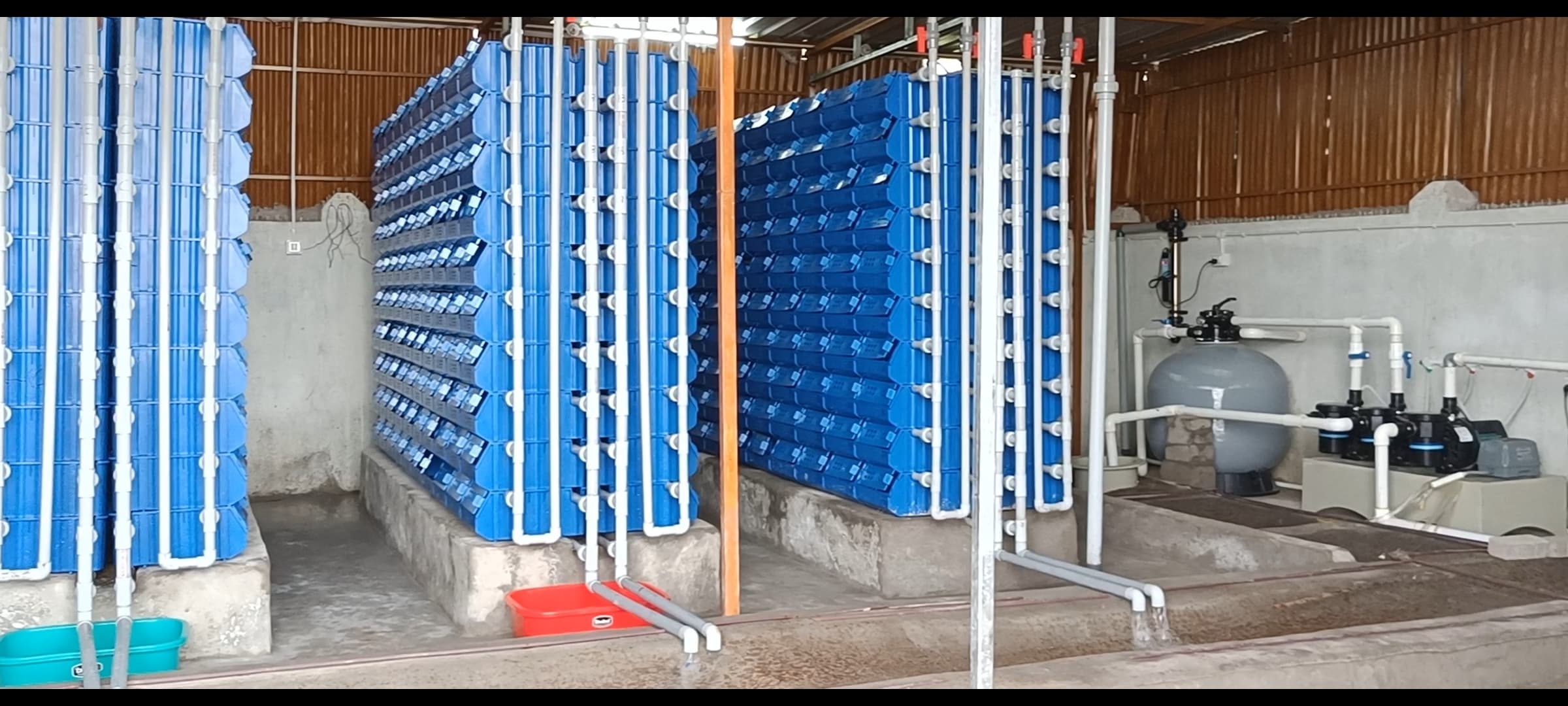 Production photograph
Local equipment connection
CrabPod
Connect local equipment to observations and commands.
Explore CrabPodAquaOS
One operating relationship
Conditions become useful in context.
The connected system is being developed to link observation, operator oversight, local response and history. Each setting determines the components and responsibilities involved.
How the system connects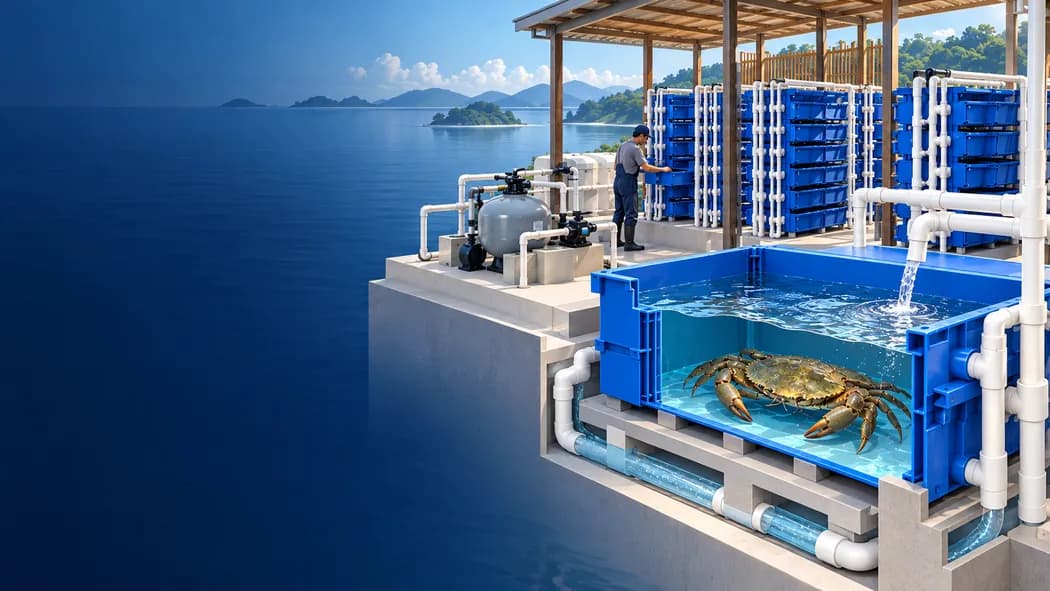
Observe
Conditions in context
Decide
Operator oversight
Respond
Bounded local action
Review
Response & history
Supporting infrastructure
Water management follows the setting.
BioPod / RAS
Water management supports controlled environments in relevant RAS or hatchery contexts. Individual habitats, ponds and finishing settings have different water and operating requirements.
The equipment, installation and measurement scope are defined with the production or research setting.
Explore the supporting water environmentLet’s start with your production setting.
Bring your role, region and production question.