The connected production system
The crab. The water. The people doing the work.
A production setting becomes useful when its observations, decisions and physical response stay connected.
Explore the components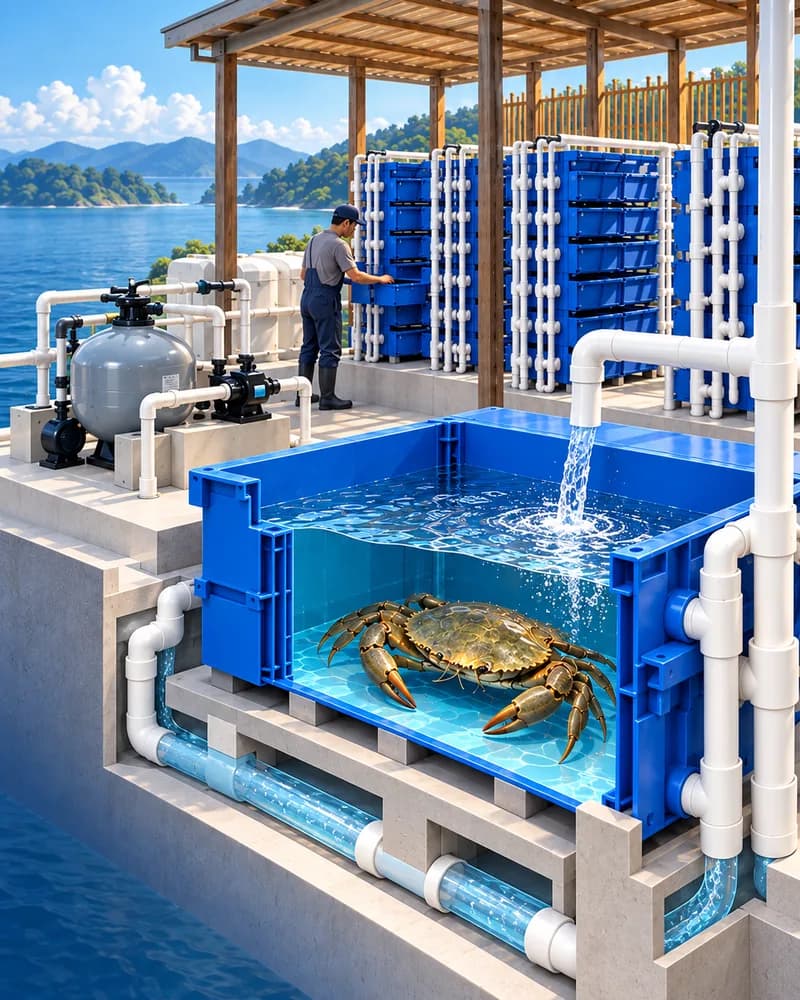
The operating relationship
Observe. Decide. Respond. Check what changed.
Operator / defined rules → review the context → decide the permitted next action
01 / Physical setting
Begin with the animal’s environment.
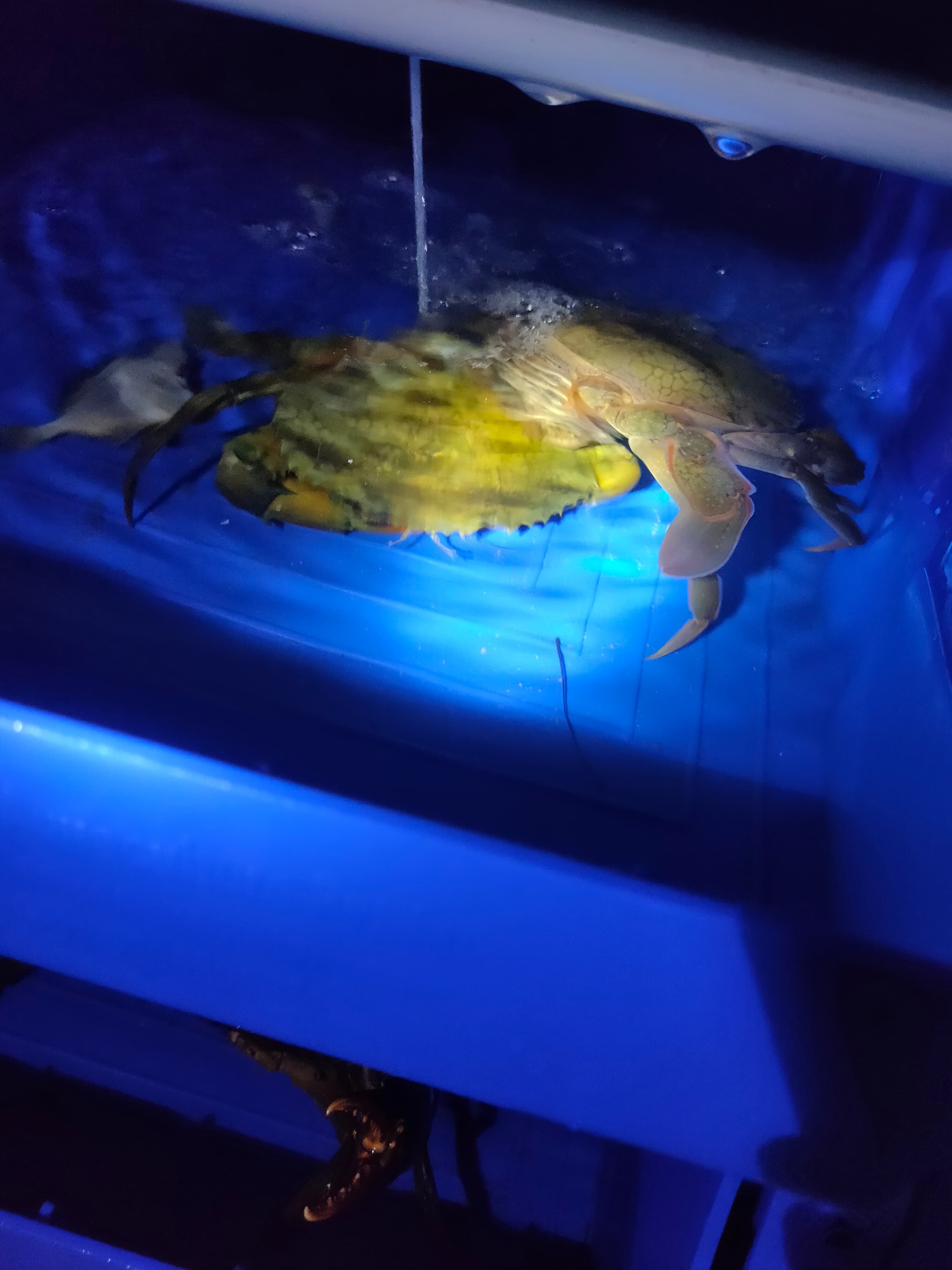
Habitat, handling and water management define the conditions in which care and observation happen. BioPod / RAS supports water management where the setting requires it.
Habitat & supporting infrastructure02 / Observation
A reading needs context.
CrabSense connects environmental measurements to the right setting. Operators add biological observations and daily work. Measurement quality and maintenance matter as much as collecting data.
Explore the sensing role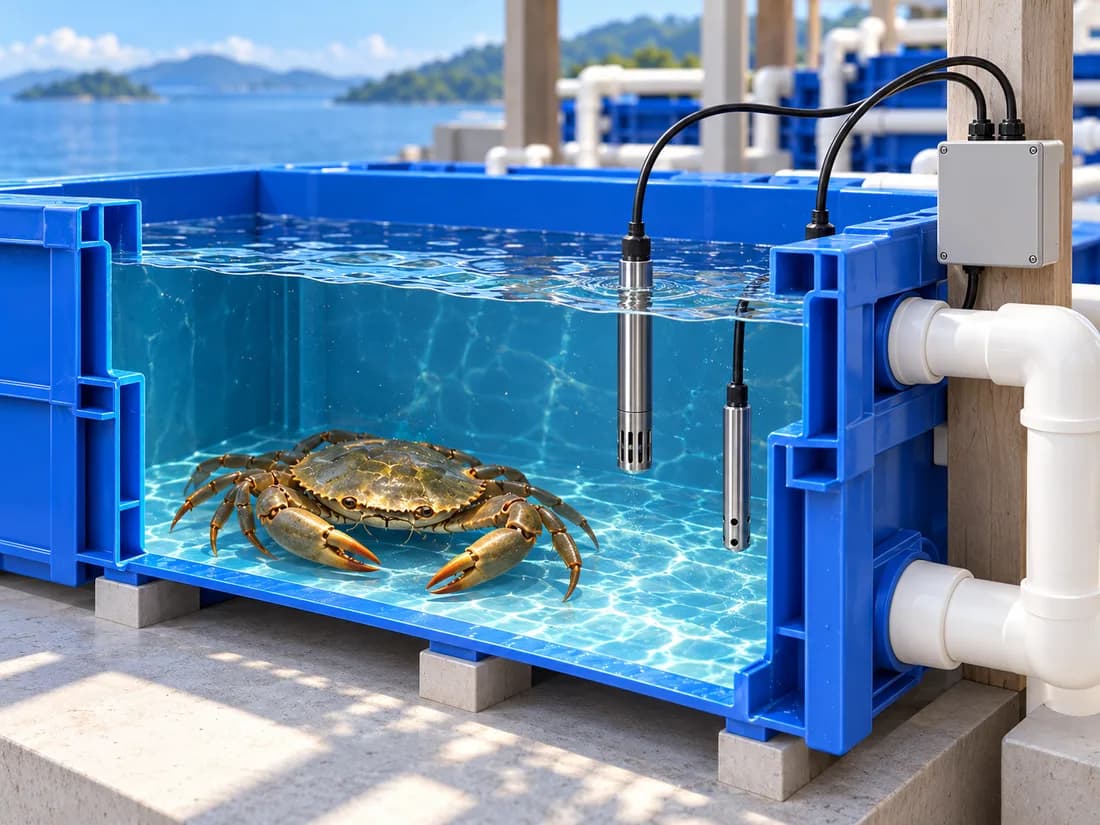
03 / Decision & response
Keep the action connected to its reason.
AquaOS links observations, decisions and operating history. Where integration is available, permitted commands pass to local equipment through CrabPod under operator oversight.
Close the loop with evidence.
Record the response, then observe what changed. An equipment acknowledgement and a biological outcome are different measurements.
Software and synthetic foundations exist. Physical integration and biological performance need their own accepted evidence.
See what we are validating
The production direction
Connect the stages.
Build around the biology.
From suitable starting stock to the condition and consistency buyers need.
- 01Seed & nursery
Suitable starting stock
- 02Pond grow-out
Biomass & daily care
- 03Aggregation
Grade & track transfers
- 04Controlled finishing
Defined habitat & intake
- 05Buyer requirements
Size, condition & cadence
Start with your production setting.
Bring your role, region and production question.